
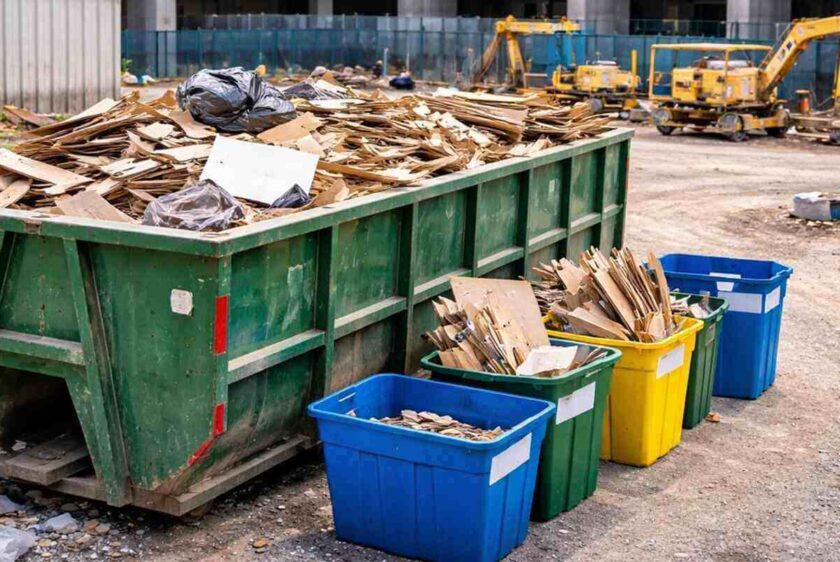
The Contractor’s Guide to Efficient Jobsite Waste Management
A disorganized jobsite usually undermines productivity gradually, eroding efficiency one hour at a time rather than causing a sudden stop.

Crews waste time moving debris instead of installing work, access paths disappear, and small piles turn into safety risks that invite injury and scrutiny from inspectors and clients.
Construction debris removal sits at the center of that daily friction. When waste handling is planned, consistent, and matched to each phase of work, jobsites stay safer, schedules stay tighter, and cleanup stops pulling labor away from production.
| In This Article: Contractors will learn practical ways to tighten up construction debris removal through smarter on-site sorting, better dumpster placement and sizing, reliable pickup scheduling, and real-world compliance practices that keep jobsites safer, cleaner, and on schedule. |
Why Daily Debris Control Affects Productivity and Safety
On active sites, waste builds up faster than many schedules anticipate. Each construction stage, from demolition through finishing work, generates its own predictable surge of debris.
When those bursts are ignored, access paths shrink, staging areas disappear, and someone eventually pulls a carpenter or foreman off production to deal with trash.
Current documentation demonstrates the magnitude of the issue: the U.S. Environmental Protection Agency estimates hundreds of millions of tons of construction and demolition debris are generated annually in the United States, with demolition work responsible for the vast majority.
On real projects, that volume translates into blocked egress, damaged finishes, and higher injury exposure if debris is allowed to pile up.
Treat Waste As a Planned Workflow From Day One
Experienced contractors set expectations for waste handling during mobilization. A simple debris flow plan answers three important questions upfront:
- What materials will be generated during each phase?
- Where will debris be staged close to the work?
- How often will containers be swapped or emptied?
In public and institutional settings, this planning philosophy frequently takes shape as a required waste management plan.
On private jobs, the same thinking still pays off. When no one is responsible for making decisions about debris, all materials end up in mixed trash, and containers may arrive in the wrong size or location.
Understand Jobsite Waste Streams Before Containers Arrive
Sorting does not require ten perfectly separated piles; it works when contractors identify the few streams that drive volume, cost, or compliance exposure.
Common high-impact categories include:

- Concrete
- Brick
- Masonry
- Clean wood
- Framing offcuts
- Scrap metal
- Cardboard packaging
Renovation work on buildings constructed before 1978 can introduce debris associated with lead-based paint. Depending on scope, demolition work may activate asbestos-related inspection and disposal requirements.
Materials such as solvents, oily rags, and aerosol products must be stored in fire-resistant containers and removed on a regular schedule.
Existing EPA guidance clarifies that most construction debris is nonhazardous, but once hazardous waste is generated, handling and documentation rules change fast. Knowing where that line sits prevents expensive surprises.
Make On-Site Sorting Easier With Layout and Clear Labels
Often, sorting outcomes largely depend on how easy the system is to use in real working conditions. When containers are distant or unclear, crews tend to use the closest available bin by default.
Organizing containers at the source of waste minimizes the likelihood of friction. Multi-story projects often benefit from small collection points on each floor, feeding a main roll-off outside.
Having clear labels for everything matters just as much. Signs that show acceptable and unacceptable materials cut contamination quickly, especially with rotating subcontractors.
Current housekeeping standards reinforce this approach. The Occupational Safety and Health Administration requires scrap and waste to be removed as work progresses, with special handling for flammable debris.
Crews who view debris control as part of daily work tend to keep sites cleaner without the need for constant reminders.
Use Pickup Scheduling To Control Safety and Production
Regular container swaps improve safety and labor flow. A roll-off that hits capacity early in the day creates a chain reaction where temporary piles form, staging zones disappear, and productivity drops.
A phase-based schedule creates more control and predictability than going with a reactive approach. Demolition stages often require frequent container changes along with separate handling for metals and masonry materials.
Isolating drywall debris during this phase prevents contamination and maintains the usability of other recyclables. During finishing phases, packaging materials accumulate quickly and still need deliberate disposal planning.
Consistent removal aligns with fire code expectations as well. Many jurisdictions require combustible debris to be cleared daily or at the end of each shift, reinforcing the idea that debris is a time-based issue rather than a weekly chore.
Choose Dumpster Sizes Based on Material Density and Access
Dumpster selection plays a meaningful role in determining overall expenses, ease of access onsite, and adherence to disposal requirements. Volume alone is not the deciding factor.
Weight limits drive hauling logistics, especially for concrete, brick, dirt, and roofing materials that reach legal limits fast.
Smaller containers swapped more often usually work better for dense debris. Larger containers suit bulky, lightweight wastes, such as framing offcuts and packaging.
Site access matters too. Roll-offs typically need roughly 12 feet of width and 40 feet of length for safe placement, which influences planning on tight residential streets or urban sites.
Book Your Construction Debris Removal Today
A reliable waste provider operates less like a vendor and more like a logistics subcontractor embedded in the project flow. Support should include container sizing advice by phase, reliable swap scheduling, clear labeling options, and recycling pathways when markets support them.
At Full Strut Disposal, we partner directly with contractors who cannot risk delays, missed pickups, or overflowing containers. We specialize in fast, dependable construction debris removal, offering competitive pricing and same-day service when availability allows.
Call us today at 757-805-5749 or request a free quote online and see how our local, contractor-focused service can take waste management off your plate and keep your jobsite running smoothly.


